Please turn your device to portrait.

Hemp and fungi open path to sustainable prefabricated building materials
The use of hemp and fungi may not immediately inspire confidence in the relevance, application and durability of prefabricated building materials. But the use of these bio-based materials may well open a new pathway to manufacturing prefabricated building elements and address carbon capture as well.
Soon, timber may no longer the only option when it comes to organic building materials. Insulation and structural components made from straw, hemp, and mycelium (fungi) are now commercially available. And, unlike wood, these crops regenerate quickly, and offer sustained levels of carbon storage. According to a 2019 study published in the Journal of Cleaner Production showed that hemp and straw can help achieve carbon-negative buildings – something near impossible with bricks or concrete.
Hemp applications
Hemp wool is a leading bio-based insulation alternative. This material is made by blending hemp fibres with polyester, potato starch, or sodium carbonate to produce a lightweight fleece-like material that matches fibreglass or foam equivalents on performance. Because it contains few synthetic ingredients, it poses lower health risks than mineral or metal-based versions which have been associated with skin and lung abnormalities. Hempitecture, a US company that makes hempwool that is 90 percent natural fibre, claims their products are “safe to touch and handle without gloves”.
Hemp can also be used in walls, roofs, and floors in the form of ‘hempcrete’. Like concrete, hempcrete can be bought in prefab blocks or be moulded on-site. This biocomposite is created by blending hemp shiv (the woody core of the hemp plant) with lime binder.
On average, hempcrete weighs an eighth of concrete.
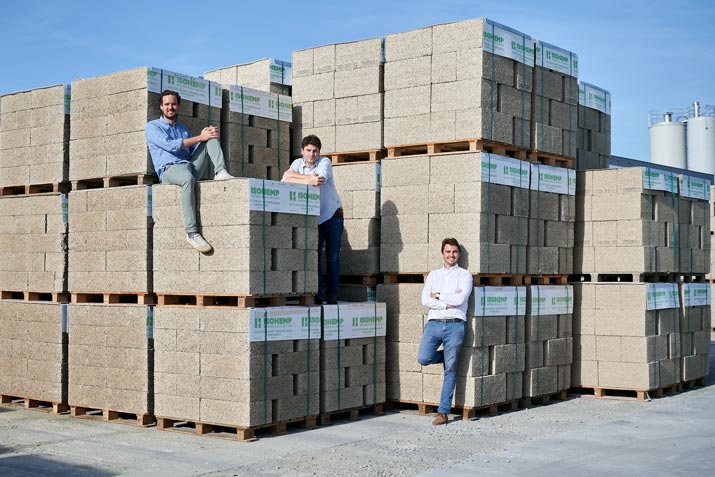
Some building companies now offer hempcrete, including US-based Americhanvre and the UK company Hempcrete. The Belgian company IsoHemp produces more than one million hempcrete prefabricated blocks per year and claims that one pallet of their hempcrete blocks stores 100 kg of carbon dioxide.
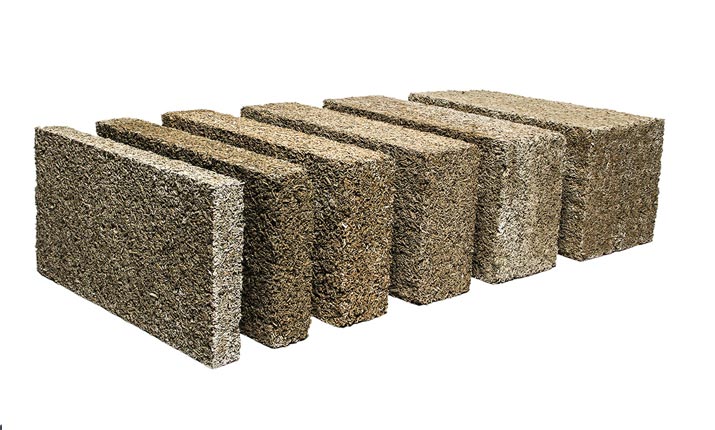
ABOVE: Hempcrete blocks made by IsoHemp.
Fungi-based products
Mycelium building blocks are made from the long, threadlike root structure of a fungus (bio-based materials).
The world’s first large-scale fungi building was the Mushroom Tower pavilion at the Museum of Modern Art in New York installed in 2014. This 13 metre structure, made using mushroom and corn stalk waste, was built to showcase the possibilities of the material. Within six weeks the bricks were returned to high quality soil for the local gardens.
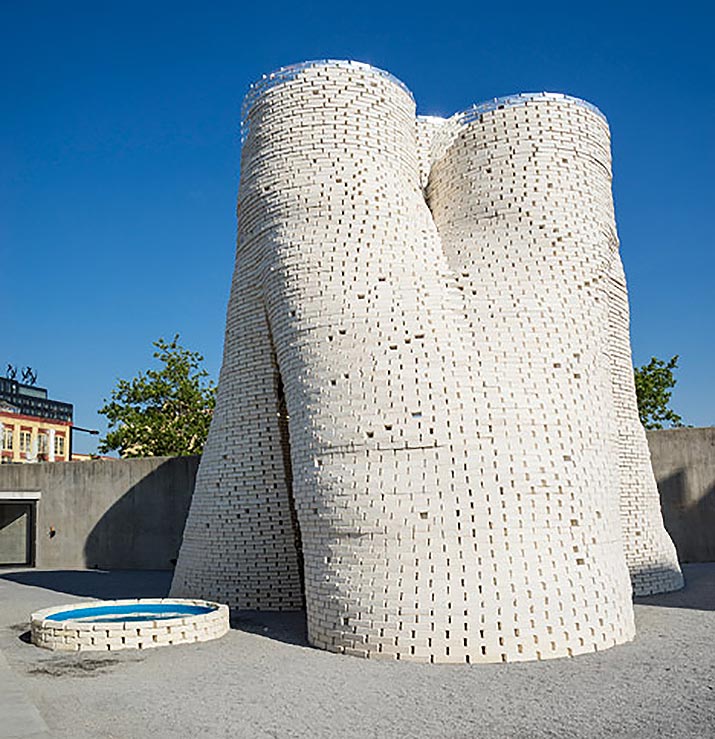
ABOVE: Mushroom Tower pavilion at the Museum of Modern Art in New York.
In 2021, a research paper on scaling bio-based circular construction in the UK found that industry respondents who had switched to bio-based materials dramatically reduced their building maintenance costs. One reported that a hempcrete building costs two-thirds less to run than a traditional building. Another reported that a warehouse built with sustainable materials saved six figures in energy costs.
See: americhanvre.com
See: ukhempcrete.com
See: isohemp.com
CLICK HERE to return to the home page for more articles.