
Please turn your device to portrait.

Modular housing identified as pathway for secondary dwelling growth.
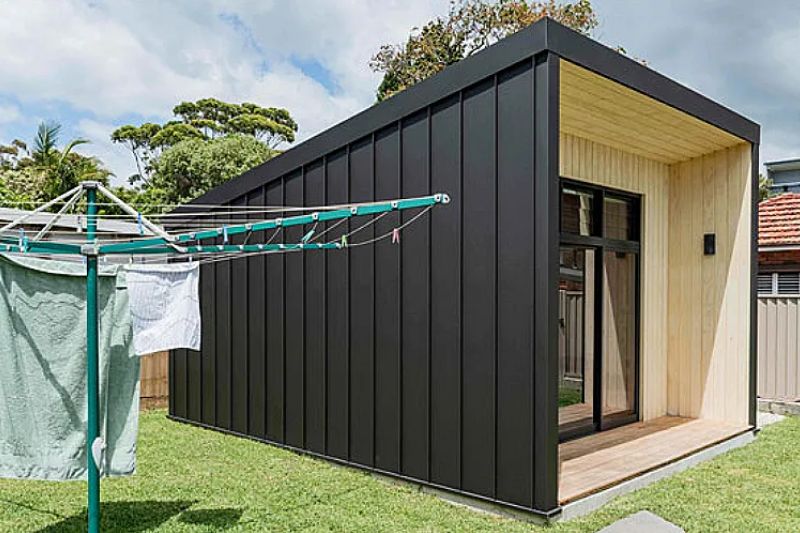
The Housing Industry Association (HIA) is calling for a nationally consistent framework governing granny flats and secondary dwellings, arguing that clearer planning pathways could unlock additional housing supply across Australia, including greater deployment of modular and factory-built housing systems. (main image: Sydney-based builder Evergreen Projects Yardstix secondary dwelling available in 20, 40 and 60 sq/m configurations.)
The industry body says smaller homes delivered through modular and offsite construction methods could play a role in increasing housing density within established suburbs. Policy changes in Tasmania and New Zealand are cited as examples of how regulatory reform could simplify approvals and enable faster delivery of compliant small homes.
According to HIA, secondary dwellings are increasingly being considered as one way to expand housing supply within existing residential areas, particularly where homeowners are seeking to add smaller homes on underutilised land.
Planning rules limiting modular granny flats

HIA Executive Director of Planning and Development Sam Heckel said the growing availability of modular homes and other modern building systems demonstrates that many Australians are looking for simpler ways to introduce additional housing within existing neighbourhoods.
“The growing popularity of modular homes and other modern building systems, including those now available through major retailers, shows that many Australians are seeking practical ways to add housing density to their backyards,” said Heckel.
He said survey results from HIA members indicate that builders expect to construct significantly more granny flats in the coming years.
“As demand for diverse housing options increases, HIA’s member survey suggests builders expect to construct ten times more granny flats in 2026 than they did in 2022,” he said.
However, Heckel said inconsistent planning rules across jurisdictions remain a significant barrier to wider adoption.
“Inconsistent regulations across state and local government boundaries add complexity and introduce additional costs which often do not improve outcomes,” he said.
National framework proposed for modular secondary dwellings
HIA is proposing a nationally consistent framework that would allow secondary dwellings up to 90 square metres to proceed through planning exemptions where designs comply with established standards.
The organisation said this approach could reduce approval timeframes and remove some of the administrative barriers currently faced by homeowners and builders, particularly where modular housing systems can be delivered using repeatable factory-based construction methods.
Heckel pointed to recent policy changes in New Zealand as an example of how standardised design compliance can trigger planning exemptions.
“HIA believes the Federal Government should take the lead by establishing national design standards,” he said.
“Removing the need for costly, bespoke planning processes could unlock thousands of additional homes across established suburbs as well as regional areas.”
HIA also noted that demand for smaller homes is increasing alongside the availability of off-the-shelf housing systems and modular construction solutions that can be manufactured in controlled environments before installation on site.








