
Please turn your device to portrait.

Western Australia has introduced legislation to expand the types of housing permitted in caravan parks and park home parks, with proposed changes recognising tiny homes, modular homes and larger relocatable dwellings.
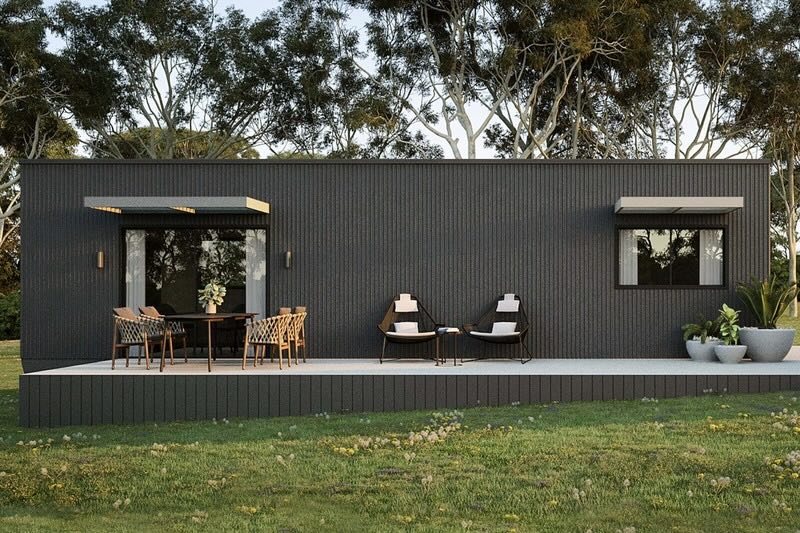
The Caravan Parks and Camping Grounds Amendment (Park Home Parks) Bill 2026, introduced to Parliament on 18 November, seeks to modernise legislation governing park homes and establish a clearer regulatory framework for their development and operation. (main image: Modular WA’s Brockman, a 47 m² modular home with one bedroom, one bathroom, kitchen, living area and European laundry.)
The proposed amendments would update the definition of a park home to accommodate contemporary designs, including relocatable structures that are not vehicle-based. This would allow a broader range of manufactured housing to be considered on existing park home sites.
Importantly, the legislation would retain the distinction between relocatable park homes and permanent residential dwellings, while providing greater certainty for park operators, residents and local governments.
Broader recognition of manufactured housing
The Bill proposes formally recognising park home parks within the legislation, which would be renamed the Caravan Parks, Park Home Parks and Camping Grounds Act 1995.
It would also establish clearer licensing and compliance arrangements for park home parks and strengthen the administrative powers available to local governments.

Local Government Minister Hannah Beazley said recognising a broader range of housing types would provide additional options for Western Australians.
“These changes will provide a clearer and more consistent framework for park residents, operators, and local governments,” Beazley said.
Housing and Works Minister John Carey identified retirees and downsizers as potential beneficiaries of the reforms.
“These changes will make it easier for retirees and downsizers to install a tiny or modular home within a caravan park or park home park,” Carey said.
The Urban Development Institute of Australia WA (UDIA WA) welcomed the legislation, particularly its potential to support land lease communities, where residents own their homes but lease the land on which they are located.
UDIA WA chief executive Tanya Steinbeck said regulatory uncertainty had previously constrained the delivery of this housing model.
The organisation has advocated for changes to the definition of park homes since establishing a Land Lease Communities Working Group in 2024.
For modular and prefabricated housing manufacturers, the proposed legislation creates a clearer pathway for supplying relocatable dwellings to residential parks and land lease developments.
However, the changes remain subject to parliamentary approval and do not remove the distinction between relocatable accommodation and permanent residential construction.
The reforms form part of Western Australia’s broader efforts to diversify housing supply through regulatory and planning changes.